
 By
By 
Modern office jobs often require long hours of sitting, staring at computer screens, and maintaining repetitive postures. While technology has improved workplace efficiency, it has also increased physical inactivity and stress levels among employees. Many office workers experience back pain, neck stiffness, poor posture, fatigue, eye strain, and mental exhaustion as a result of sedentary routines.
Yoga offers a practical and effective way to counter these problems. A simple daily yoga routine can improve flexibility, reduce muscle tension, support better posture, and enhance mental focus without requiring expensive equipment or extensive training. Even a short routine practiced consistently can produce noticeable physical and emotional benefits.
Office yoga does not require advanced poses or long sessions. Gentle stretching, controlled breathing, and mindful movement can help office workers stay healthier, more energized, and less stressed throughout the day.
Why Office Workers Need Yoga
Sitting for extended periods affects the body in several ways. Limited movement can weaken muscles, tighten joints, and reduce circulation.
Common problems associated with desk jobs include:
- Neck pain
- Shoulder stiffness
- Lower back discomfort
- Tight hips
- Wrist strain
- Poor posture
- Mental fatigue
- Stress and anxiety
Yoga addresses many of these issues by promoting movement, flexibility, balance, and relaxation.
Benefits of Daily Yoga for Office Workers
Practicing yoga regularly can improve both physical and mental well-being.
Improves Posture
Poor posture is common among office workers due to prolonged sitting and screen use.
Yoga strengthens the core, back, and shoulder muscles that support spinal alignment. Better posture may reduce strain on the neck and lower back.
Reduces Muscle Tension
Sitting for long periods often causes stiffness in the hips, shoulders, and spine.
Gentle stretching helps release tight muscles and improve mobility.
Enhances Flexibility
Regular yoga practice gradually increases flexibility and joint mobility, making everyday movements more comfortable.
Supports Stress Reduction
Yoga combines breathing exercises with mindful movement, helping calm the nervous system and reduce stress.
Many office workers find yoga beneficial for improving emotional balance and mental clarity.
Increases Energy Levels
Short yoga sessions may improve circulation and oxygen flow, helping reduce fatigue and improve focus during work hours.
Improves Breathing
Stress and poor posture often lead to shallow breathing.
Yoga encourages deeper breathing patterns that support relaxation and concentration.
Preparing for a Daily Office Yoga Routine
A simple yoga routine can be performed at home, in a quiet office space, or even at a desk.
Helpful preparation tips include:
- Wear comfortable clothing
- Use a yoga mat if available
- Practice in a quiet environment
- Avoid heavy meals before yoga
- Move slowly and gently
Beginners should focus on comfort rather than perfection.
Simple Daily Yoga Routine for Office Workers
This routine includes beginner-friendly poses designed to reduce tension and improve mobility. The entire sequence can be completed in about 15 to 25 minutes.
Neck Stretch
Long hours at a computer often create neck tension.
How to Perform
- Sit or stand comfortably
- Slowly tilt the head toward one shoulder
- Hold for 15 to 20 seconds
- Repeat on the opposite side
- Gently look down and hold briefly
This stretch helps release stiffness in the neck and upper shoulders.
Shoulder Rolls
Shoulder tension commonly develops from typing and desk work.
How to Perform
- Sit or stand upright
- Roll the shoulders forward several times
- Reverse the movement and roll backward
- Breathe deeply during the movement
Shoulder rolls improve circulation and reduce upper body tightness.
Cat Cow Stretch
The cat cow stretch improves spinal flexibility and posture.
How to Perform
- Begin on hands and knees
- Inhale while arching the back and lifting the chest
- Exhale while rounding the spine and lowering the head
- Repeat slowly for several breaths
This movement helps relieve spinal stiffness caused by prolonged sitting.
Child’s Pose
Child’s pose gently stretches the back, hips, and shoulders.
How to Perform
- Kneel on the floor
- Sit back toward the heels
- Extend the arms forward
- Rest the forehead toward the mat
- Hold for 30 seconds to one minute
This pose encourages relaxation and gentle stretching.
Seated Forward Fold
This stretch targets the hamstrings and lower back.
How to Perform
- Sit with legs extended forward
- Slowly lean toward the feet
- Keep the spine long
- Avoid forcing the stretch
Office workers with tight hamstrings may find this pose especially beneficial.
Seated Spinal Twist
Twisting movements help improve spinal mobility and reduce back stiffness.
How to Perform
- Sit upright in a chair or on the floor
- Twist gently toward one side
- Hold briefly while breathing deeply
- Repeat on the opposite side
This pose helps improve flexibility and posture.
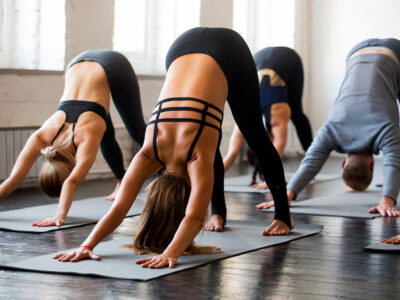
Downward Facing Dog
Downward dog stretches the entire body and improves circulation.
How to Perform
- Begin on hands and knees
- Lift the hips upward
- Straighten the legs as comfortable
- Press the hands firmly into the floor
- Relax the neck
This pose stretches the spine, calves, shoulders, and hamstrings.
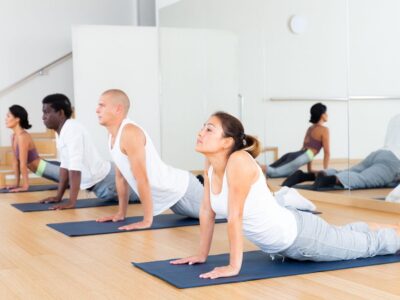
Cobra Pose
Cobra pose strengthens the back and opens the chest.
How to Perform
- Lie face down
- Place hands under the shoulders
- Lift the chest gently while keeping elbows slightly bent
- Avoid straining the lower back
This movement may help counteract slouched sitting posture.
Standing Forward Bend
Standing forward bends help release lower back and leg tension.
How to Perform
- Stand with feet hip-width apart
- Bend forward slowly from the hips
- Let the arms relax toward the floor
- Slightly bend the knees if necessary
This stretch may improve circulation and reduce stiffness.
Mountain Pose
Mountain pose promotes balance and body awareness.
How to Perform
- Stand upright with feet together or hip-width apart
- Relax the shoulders
- Engage the core
- Breathe deeply
Although simple, this posture encourages proper alignment and posture awareness.
Breathing Exercises for Office Stress
Breathing exercises are an important part of yoga and can be practiced throughout the workday.
Deep Belly Breathing
Deep breathing helps activate the body’s relaxation response.
How to Perform
- Sit comfortably
- Place one hand on the abdomen
- Inhale slowly through the nose
- Allow the abdomen to rise
- Exhale slowly through the mouth
Practicing for a few minutes may help reduce stress and improve focus.
Alternate Nostril Breathing
This breathing technique may support mental calmness and concentration.
How to Perform
- Sit comfortably
- Close one nostril while inhaling through the other
- Switch nostrils during exhalation
- Repeat slowly
Breathing exercises should always feel comfortable and relaxed.
Chair Yoga for Busy Workdays
Some yoga stretches can be performed directly at a desk without changing clothes.
Examples include:
- Seated twists
- Wrist stretches
- Neck rolls
- Shoulder stretches
- Ankle rotations
Chair yoga is useful for workers with limited time or workspace.
How Yoga Supports Mental Health at Work
Workplace stress can affect concentration, mood, and productivity.
Yoga supports mental health by helping reduce:
- Anxiety
- Mental fatigue
- Irritability
- Emotional tension
Mindful movement and breathing encourage relaxation and emotional balance.
Many people report feeling calmer and more focused after even short yoga sessions.
Common Mistakes Beginners Should Avoid
Starting yoga safely is important for preventing discomfort or injury.
Forcing Flexibility
Yoga should never feel painful.
Individuals should move gently and avoid pushing beyond comfortable limits.
Holding the Breath
Breathing is essential during yoga practice.
Slow and steady breathing helps improve relaxation and body awareness.
Comparing Progress
Flexibility and balance vary greatly between individuals.
Yoga is a personal practice, and progress develops gradually over time.
Skipping Consistency
Practicing occasionally may provide temporary relief, but consistent routines often produce the best long-term results.
Tips for Staying Consistent With Daily Yoga
Building a daily yoga habit may become easier with simple strategies.
Helpful tips include:
- Practice at the same time each day
- Start with short sessions
- Use guided videos if needed
- Create a relaxing environment
- Focus on gradual improvement
Consistency matters more than intensity.
Combining Yoga With Healthy Workplace Habits
Yoga works best when combined with other healthy routines.
Office workers can further support health by:
- Taking regular movement breaks
- Adjusting workstation ergonomics
- Staying hydrated
- Walking during breaks
- Limiting prolonged sitting
Balanced habits improve overall wellness and reduce physical strain.
Long Term Benefits of Office Yoga
Daily yoga may provide long-term benefits beyond immediate stress relief.
Potential long-term improvements include:
- Better posture
- Increased flexibility
- Improved focus
- Reduced chronic pain
- Better sleep quality
- Lower stress levels
- Greater body awareness
Regular movement supports healthier aging and workplace well-being.
Conclusion
A simple daily yoga routine can help office workers manage the physical and mental demands of modern desk jobs. Long hours of sitting often lead to stiffness, poor posture, stress, and reduced energy, but gentle yoga movements and breathing exercises can help restore balance and comfort.
Yoga does not require advanced skills or lengthy workouts to be effective. Consistent daily practice, even for a few minutes, can improve flexibility, posture, circulation, and emotional well-being over time.
By incorporating yoga into daily routines, office workers can support both short-term comfort and long-term health while creating healthier habits for work and everyday life.
FAQ
1. How long should office workers practice yoga daily?
Even 10 to 20 minutes of daily yoga can provide noticeable benefits when practiced consistently.
2. Can yoga help reduce back pain from sitting?
Yes, yoga may help relieve back pain by improving flexibility, posture, and muscle strength.
3. Is yoga safe for beginners?
Most gentle yoga poses are safe for beginners when performed carefully and within comfortable limits.
4. Can yoga improve focus and productivity at work?
Many people find yoga helpful for reducing stress, improving concentration, and increasing mental clarity.
5. Do office workers need special equipment for yoga?
No, many office yoga routines require little or no equipment beyond comfortable clothing and open space.
6. Is chair yoga effective?
Yes, chair yoga can help reduce stiffness, improve circulation, and relieve tension during busy workdays.
7. What is the best time for office workers to practice yoga?
Yoga can be practiced before work, during breaks, or after work depending on personal schedules and preferences.





Comments