
 By
By 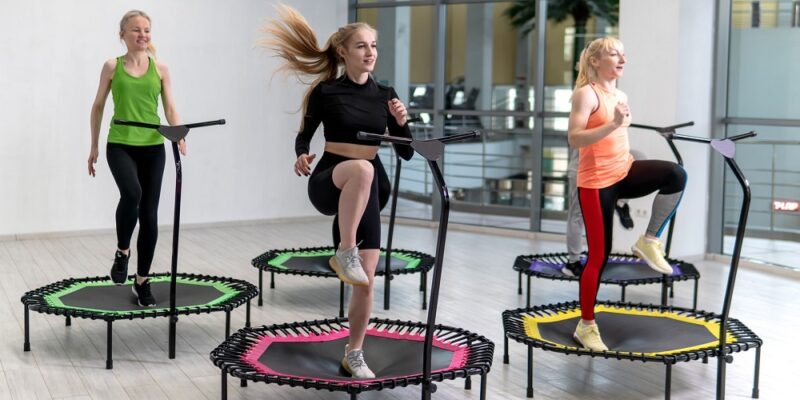
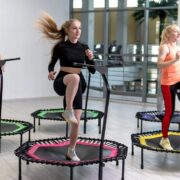
Balance during trampoline fitness singapore is not a fixed ability that remains unchanged throughout a workout. It depends on visual focus, foot placement, joint control, concentration and the ability to respond to a moving surface. As fatigue develops, these systems may become less precise.
A participant can therefore appear stable at the beginning of class but struggle during later directional sequences. Understanding how fatigue influences balance allows the workout to remain challenging without allowing uncontrolled movement to become normal.
Balance Is a Continuous Process
Standing still on a firm floor may look like a simple balance task, but the body is constantly making small adjustments. A trampoline surface increases this demand because it moves in response to every contact.
Participants must control the pressure through their feet while organising the knees, hips and torso. The next rebound begins almost immediately, leaving limited time for correction.
Balance in this setting is not about eliminating movement. It is about making appropriate adjustments while maintaining the intended rhythm.
The participant should feel responsive rather than rigid.
Fatigue Changes Sensory Attention
Early in a class, participants can focus on the instructor, music, foot placement and breathing simultaneously. Later, physical effort may consume more attention.
Coaching cues can become harder to process, particularly during unfamiliar combinations. The participant may watch others for guidance and lose awareness of their own position.
Members training with TFX Singapore can manage this by choosing a simpler variation when concentration begins to decline. Reducing complexity allows attention to return to landing and rhythm.
This is particularly important in evening sessions after a mentally demanding workday.
Watch for Drifting Foot Placement
One of the clearest signs of declining balance is gradual movement away from the centre of the trampoline. The participant may begin a sequence in a stable position and finish closer to one edge.
Drifting can occur because of uneven pressure, excessive rebound height or an uncontrolled directional movement. It may also reflect a preferred side becoming dominant under fatigue.
The participant should not attempt to correct a large drift with one aggressive jump. Reducing cadence and using several small adjustments is more controlled.
Returning to basic rebounds can restore position before the next sequence begins.
Uneven Timing Can Reveal Fatigue
During symmetrical movements, both feet should generally contact the surface at a similar time. Fatigue may cause one side to land earlier or accept more pressure.
This difference may be difficult to feel, particularly when the music is fast. An instructor’s observation can help identify the change.
Participants can also listen to the landing sound. Irregular contact may suggest that timing or pressure has changed.
The goal is not perfect mechanical symmetry in every repetition. It is to notice a repeated pattern that becomes more obvious as effort rises.
Visual Focus Supports Stability
Constantly looking down at the feet can pull the torso forward and reduce awareness of the wider environment. Looking around the room during a demanding sequence can also disturb balance.
A steady visual reference helps the body organise movement. Participants can look forward while using peripheral vision to remain aware of the trampoline boundary.
During turns or directional changes, the eyes should move deliberately rather than unpredictably. The head and torso can then follow the intended movement.
Visual focus is especially useful when learning a new pattern or returning after a break.
Breathing Affects Postural Control
Participants sometimes hold their breath while concentrating on a difficult combination. This creates unnecessary tension and may cause fatigue to increase more quickly.
Steady breathing supports rhythm and helps the torso remain responsive. Exhaling during a demanding portion of the movement can reduce the tendency to brace excessively.
When breathing becomes uncontrolled, movement often follows. The shoulders rise, the arms become less coordinated and the feet begin landing less consistently.
A brief reduction in cadence can restore both breathing and balance.
Simplify Before Stopping Completely
When balance begins to decline, the only options are not continuing at full intensity or leaving the class. Movement can be simplified while the participant remains engaged.
Directional patterns can return to vertical rebounds. Large arm movements can become smaller, while fast cadence can be reduced to a controlled rhythm.
This keeps the body moving and allows coordination to recover. Once stability improves, selected elements can be reintroduced.
The ability to modify is particularly important in group classes, where the overall sequence continues even when an individual needs a different level.
Train Balance Without Chasing Instability
A workout does not need to make participants nearly fall in order to improve balance. Excessive instability may simply encourage defensive movement.
Useful balance training creates a challenge that requires attention but remains recoverable. Participants should be able to make small corrections without abandoning the pattern.
Progress can come from longer controlled intervals, modest directional changes or reduced reliance on visual checking. Each development increases the demand without making the task chaotic.
The most advanced option is the one that preserves control under an appropriate challenge.
Consider Fatigue From Other Training
Balance during class can be affected by workouts completed earlier in the week. Heavy leg training, long runs or demanding sports sessions may reduce lower-body control.
Participants should consider total fatigue rather than judging the trampoline class independently. Smaller rebounds may be appropriate when the calves, quadriceps or hips are already tired.
Daily activity also matters. Long periods of standing, extensive walking and insufficient sleep can influence readiness.
A class plan should respond to the participant who arrives, not the performance they expected when booking.
Use Recovery Intervals Productively
Recovery intervals allow more than breathing to settle. They give the nervous system and attention a chance to reorganise.
Gentle stepping or low rebounds can help participants assess whether foot pressure feels even. They can also reset visual focus and relax unnecessary shoulder tension.
If balance remains poor after recovery, the next interval should use a simpler variation. Increasing speed to regain confidence is unlikely to solve the underlying issue.
A productive recovery prepares the participant for better movement, not merely more movement.
Measure Progress Through Consistency
Balance progress may appear as reduced drifting, quieter landings or better control during the final part of class. Participants may also notice that directional changes require less conscious correction.
These signs are more useful than comparing jump height with another person. Balance develops through repeatable exposure and appropriate challenge.
Participants can occasionally ask the instructor whether their later-session technique differs from their warm-up. This provides an external perspective on fatigue-related changes.
Over time, the objective is to maintain reliable movement across a wider range of intensities.
Finish With Control
Fatigue is a normal part of fitness training, but it should not determine the quality of every final repetition. A well-designed class allows participants to recognise when balance is changing and select an appropriate response.
Reducing cadence, simplifying direction and restoring visual focus can keep the session productive. These adjustments build awareness that is useful beyond a single class.
Trampoline fitness challenges balance because the surface continuously responds to the participant. Learning to manage that response under fatigue turns repeated bouncing into deliberate coordination training.






Comments